

Traditionally, brands used photography for presenting furniture to customers online, but customers can’t touch or try furniture when shopping online. They rely on images to understand how a product looks and fits into their space.
Today, 3D product rendering services allow brands to create realistic images of different colours, finishes and variations.
So, which is better? It depends on your products, budget, timeline and how you plan to use the images. This guide compares product rendering vs photography to help you decide.
What Is 3D Product Rendering?
Table of Contents
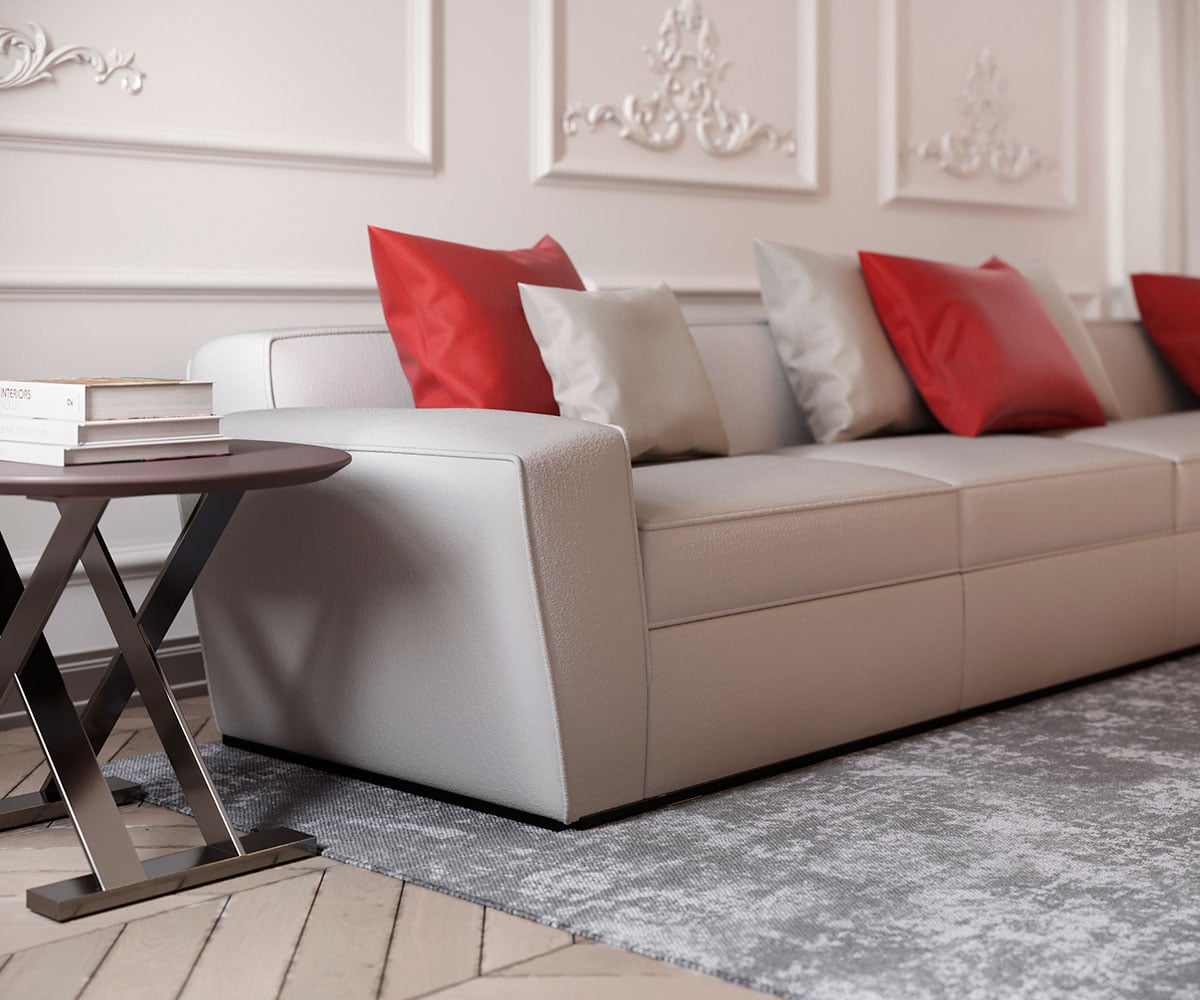
3D product rendering is the process of creating a realistic digital image of a product from a 3D model. For a furniture brand, that could be a sofa, dining table, wardrobe, bed or chair. The model is built based on the product’s exact dimensions and geometry. A 2D scene is then created using a virtual camera, with the right materials, colours, textures, and finishes added so the final image looks as close to the real product as possible.
The image is created from the product’s design, not from a physical product. This means brands can create visuals even before the furniture is manufactured.
For example: A new sofa can be shown in different fabrics, rooms and angles while it is still in production. This helps brands prepare product images and marketing materials earlier.
That flexibility is the main reason furniture companies look at 3D rendering services. It isn’t just about making products look good. It’s about creating a realistic digital replica of your product and having more control over how images are created and reused before the physical version is built.
What Is Furniture Product Photography?
Furniture photography is a real piece that is placed in a studio, showroom or styled home and photographed with professional cameras, lighting and props. It shows the product exactly as it exists on the day of the shoot: the real shape, surface, stitching, colour and finish.
That authenticity is photography’s biggest strength. It works best when the physical product is ready, and when a brand wants to show how it looks in the real world. A family relaxing on a sofa in a beautifully styled living room tells a story that a catalogue image can’t.
Photography isn’t becoming irrelevant. The real question is whether it is the most practical way to create every image a brand needs.
Why Product Images Matter So Much in Furniture
Furniture is a long-term purchase, so customers want to feel confident about their choice. Before buying, they often want clear answers to questions like:
- What does it look like from the side and the back?
- How deep is the seat?
- How does the fabric look in different light?
- How does walnut compare with oak?
- Will it suit my living room, and will it fit?
- Does it come in another colour?
The more options a brand offers, the more images it needs, and the more complicated production becomes. That is exactly where photography of the actual products and its variations in different settings matter. The combination of product photography and product rendering makes it easier.
The Difference Between Product Rendering vs Photography
At the simplest level, photography captures a physical product, while 3D rendering creates a digital representation of it. In practice, the differences run deeper.
| Comparison | 3D Rendering | Photography |
|---|---|---|
| Physical product needed? | No, it can start from design files | Yes, every item must be available |
| Colours and finishes | Changed digitally on one model | Often needs a separate sample and setup |
| Natural imperfections | Must be recreated on purpose | Captured naturally |
| Scene control | Full control of room, light and angle | Needs a physical set for each scene |
| Pre-launch visuals | Possible before manufacturing ends | Only after the product is built |
| Real people and moments | Hard to reproduce convincingly | A clear strength |
| Best for | Catalogues, variations, e-commerce, pre-launch | Hero campaigns, craftsmanship, brand storytelling |
What Photography and 3D Rendering Each Offer
You need a physical product for photography
This sounds obvious, but it becomes a real limit for brands with large or fast-moving collections. Photographing them means all designs must be built, delivered, styled and scheduled. Rendering can start from a detailed digital 3D model, which helps while the product is still under development or pre-launch phase.
Variations Are Easier With 3D Rendering
A sofa in different fabrics or a table in multiple finishes can mean multiple photo shoots. With 3D rendering, colours, materials, and finishes can be changed digitally, making variations much easier to create.
The key is accuracy, the digital model should closely match the physical product you plan to build, including its dimensions, materials, and details.
Photography captures real imperfections
Depending on your goal, this is either a benefit or a limit. A handmade furniture brand may want customers to see the natural variation in wood grain, and a camera records that without effort. A render can reproduce it too, but someone has to design it deliberately.
Rendering offers more control over the scene
With rendering you control the room, wall colour, flooring, lighting and camera position. The same sofa can appear in a contemporary apartment, a warm traditional lounge and a minimalist space without ever being moved. With photography, each of those scenes is a separate physical setup.
Photography Still Feels More Real
Even realistic renders are digital. Photography shows the actual product, which can be important when customers need to see the real material and finish. For this reason, many brands use both.
When Should a Furniture Brand Choose 3D Rendering?
When the product is still in development
If the design is ready but manufacturing is still underway, rendering lets brands create product pages, catalogues and marketing materials before the furniture is physically available.
When there are many colours and finishes
If a sofa comes in eight fabrics, the model stays the same and only the material changes. That makes it much easier to build a complete visual range.
When you need multiple angles
A good product page often needs front, side, back, three-quarter, close-up and lifestyle views. Once a 3D model exists, new angles are just new camera positions. No one has to move the furniture.
When you need lifestyle scenes
A dining table on a white background shows the product. A dining table in a styled room with chairs, lighting and artwork shows how it fits into someone’s life. Rendering makes it easier to build several such scenes for the same product.
When Is Photography Still the Better Choice?
Photography has the edge when the physical product is ready and you want to show exactly what customers will receive.
Photography can be the right option when:
- Real people interacting with the product, such as someone lying on a mattress or a family using a sofa
- Showcasing the craftsmanship of a finished wooden piece
- Brand campaigns that need a consistent, recognisable visual identity across websites, catalogues, ads and social media
- Real homes and authentic environments
In these cases, the physical world adds value that a digital image struggles to match.
Why Many Furniture Brands Use Both
The smartest approach is usually a mix. The two methods do different jobs, so they work well together.
| Use 3D Rendering for | Use Photography for |
|---|---|
| New products that are not physically ready | Finished product shoots |
| Colour and fabric variations | Lifestyle campaigns |
| Multiple configurations | Social media storytelling |
| E-commerce product images | Real customer environments |
| Digital catalogues and presentations | Craftsmanship and material detail |
| Room visualisations and pre-launch campaigns | Seasonal brand campaigns |
- A brand might render 80 product configurations for its website and photograph one big seasonal campaign. Another might photograph every finished product and use rendering to add extra colours and room settings. There is no universal formula.
How 3D Rendering Helps Furniture E-commerce and Launches
Online buyers can’t touch or try furniture, so clear visuals are important. Rendering can provide product views, close-ups, colour options and lifestyle scenes without needing a separate photoshoot for every variation.
It can also help with product launches. Brands can create product pages, catalogues and marketing materials before the furniture is physically ready, giving the team more time to prepare for launch.
Can 3D Rendering Replace Product Photography?
3D rendering can reduce the need for photography, but it doesn’t always replace it. Rendering offers more flexibility, while photography shows the actual product. Many furniture brands use both, depending on what they need.
How to Decide: Six Quick Questions
3D rendering can reduce the need for photography, but it doesn’t always replace it. Rendering offers more flexibility, while photography shows the actual product. Many furniture brands use both, depending on what they need.
Final Thoughts
Product imagery is more than just visuals, it helps customers understand what they’re buying. Photography offers authenticity and real-world detail, while 3D rendering provides flexibility, speed, and control over views, colours, finishes, and settings.
You don’t have to choose one. Use photography for authenticity and 3D rendering when you need speed, variety, and creative control. Together, they can create a stronger product presentation.
FAQ’s
What are 3D product rendering services? eplace traditional 3D rendering?
They involve creating realistic digital images of products using 3D models, materials, lighting and virtual environments. For furniture brands, they can produce product images, colour variations, lifestyle scenes and marketing visuals without photographing every physical version.
Can furniture be rendered before it is manufactured?
Yes. If the design and specifications are available, a 3D model can be built before the finished piece is made. That lets brands prepare some marketing and sales visuals earlier.
Can 3D rendering show different furniture colours?
Yes. Once the model is built, different materials, colours and finishes can be applied digitally, which makes it easier to show a full range of options.
Are 3D renders suitable for furniture websites?
Yes. Renders work for e-commerce product pages, catalogues, advertising, social media and presentations. The exact image requirements depend on where the visuals will be used.
How realistic can furniture rendering be?
It depends on the quality of the model, materials, lighting, camera setup and post-production. High-quality rendering can come very close to professional product photography.

