

Real estate developers and investors have always operated on a fundamental tension. It takes years to deliver buildings, but sales decisions are made in days, which are often based on incomplete information. Static renders close some of that gap. Floor plans close a little more. But neither answers the question that actually determines whether a buyer commits, “What exactly am I buying, and how confident can I be that it will deliver what it promises?”
Digital twins are the first technology in real estate that answers that question honestly, and in 2026, the real estate developers who understand this are pulling ahead of those who don’t.
The Problem With How Properties Have Been Sold
Table of Contents
Off-plan sales have always required buyers to trust that the finished asset will match what they were shown. Developers have managed this with renders, show apartments, and marketing timelines. These tools generate interest. They are less effective at building the confidence that converts quickly and holds up after handover.
The gap between what buyers are shown and what they receive is not always dramatic, but it is almost always present. A layout that felt spacious in a render reads differently in person. A finish approved on a sample board behaves differently at scale. A construction timeline in marketing materials rarely reflects what is actually happening on site. Collectively, these gaps create an environment where buyer hesitation is rational, pre-sale conversion takes longer than it should, and post-handover disputes are a predictable cost of doing business.
Digital twins address this not by improving how properties are presented, but by changing the quality of information buyers are working with entirely.

What a Digital Twin Actually Changes in the Sales Process
A digital twin is a live, continuously updated digital replica of a physical property. It is built from 3D scans, IoT data, and construction software. Unlike a render, which shows a single idealised version of a space, a digital twin reflects the property as it actually exists or is being built. For real estate sales, this shift in information quality changes the dynamics at several stages.
At pre-sale stage
At this stage, buyers can explore a photorealistic, accurate model of their specific unit, not just a generic show apartment, but the actual floor, orientation, and layout they are purchasing. They can assess daylight behaviour based on real building geometry, understand their unit’s spatial relationship to amenities, and select finish packages within a controlled environment that maintains design consistency across the development. Buyers who can interact with that level of specificity make decisions faster and with fewer conditions attached.
During construction
Digital twins enable milestone-driven transparency. Rather than marketing updates, buyers receive progress tied to verifiable data, such as structural completions, system installations, finish milestones. In markets where trust between developer and buyer is fragile, this is a measurable competitive advantage.
At handover and beyond
The digital twin service continues generating value. Buyers receive not just a finished apartment but an operational asset, one that monitors energy consumption, tracks maintenance requirements, and surfaces issues before they become costly repairs. For investors, this translates into asset performance data that directly supports valuation and long-term management decisions.
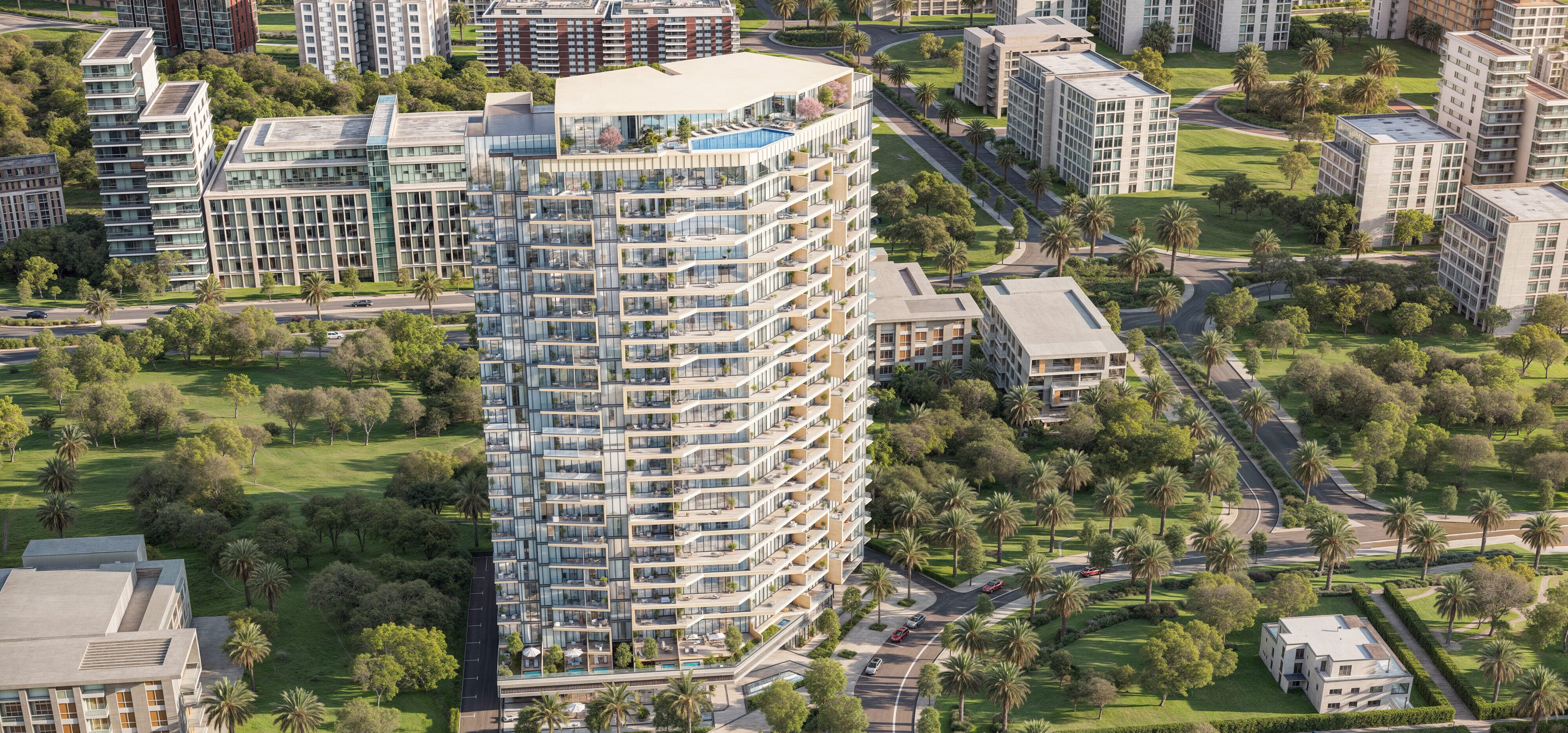
Why Digital Twin Service Matters for Developers and Investors Specifically
The business case for digital twins is not primarily about technology adoption. It is about risk reduction and margin protection at scale. Pre-sale velocity is the metric that matters most in development finance. Projects that achieve strong early pre-sales reduce financing costs, demonstrate market demand to lenders, and create the runway needed to manage construction complexity. Digital twins shorten the sales cycle by eliminating the uncertainty that causes buyers to delay commitment. And, in premium segments, where buyers are more discerning and due diligence is more rigorous, the quality of information in the sales process directly affects conversion rates.
Change orders are among the most reliably expensive events in any development project. A significant portion trace back to decisions made on incomplete visual information, like materials approved in isolation, finishes that interact with lighting in ways that the renderings didn’t capture. Digital twins reduce the frequency of these decisions being made incorrectly in the first place. At the portfolio level, digital twins aggregate performance data across multiple assets into a single operational layer, which includes the energy performance, occupancy patterns, maintenance costs, and capital expenditure requirements visible across an entire portfolio rather than property by property.
Digital twins are projected to power 70% of smart buildings by 2026. That figure matters not because of what it says about technology adoption, but because of what it implies about competitive positioning. Developers and investors operating without digital twin-enabled assets in premium segments are increasingly competing against projects that offer buyers a demonstrably higher quality of information and confidence.
The Compounding Advantage
The value of a digital twin is not static. It compounds. A twin built during design development becomes more accurate as construction data is integrated, more valuable at pre-sale as buyers interact with a precise model of their specific unit, and operationally useful at handover as building systems come online. It then continues generating performance, maintenance, and asset condition data for the life of the property.
For developers and investors evaluating where technology spend generates the most durable return, digital twins sit in a category of their own. It is a single investment that improves outcomes at every stage of the asset lifecycle. The developers who recognised this early are not waiting for the technology to mature further. In 2026, it already has.
FAQ’s
What is the difference between a digital twin and a 3D render in real estate?
A 3D render is a static, idealised image of a space created for presentation purposes. A digital twin is a live, data-connected replica of the actual property that updates as construction progresses and continues operating after handover. A render shows what a space could look like. A digital twin reflects what it actually is.
At what stage of a development project should a digital twin be commissioned?
Ideally at the design development stage, before construction begins. Commissioning a twin only at the marketing stage misses its most valuable function — acting as a decision-making and design validation tool before choices become permanent and expensive to reverse.
How do digital twins reduce change orders during construction?
Change orders frequently trace back to design decisions that were approved on incomplete visual information. A digital twin tests materials, layouts, and system configurations against real building data before they are built, catching conflicts and misalignments at the model stage rather than on site.
Can smaller developers justify the cost of digital twin technology?
The cost of implementing a digital twin needs to be weighed against the cost of the problems it prevents, such as change orders, pre-sale delays, and post-handover disputes. For mid-scale apartment developments, where these costs compound across multiple identical units, the return is typically justified. Entry-level twin solutions have also become more accessible as the technology has matured through 2025 and 2026.
How does a digital twin continue to add value after a property is handed over?
Post-handover, the twin transitions into an operational tool. It monitors building systems in real time, flags maintenance requirements before they escalate into costly repairs, tracks energy performance, and provides investors with ongoing asset condition data. For portfolio investors, this data becomes a benchmarking layer across multiple properties, something previously unavailable without expensive manual audits.

