
Florence Palace – Italian Palazzo Interior Visualization & Classical Luxury Rendering by Render Atelier
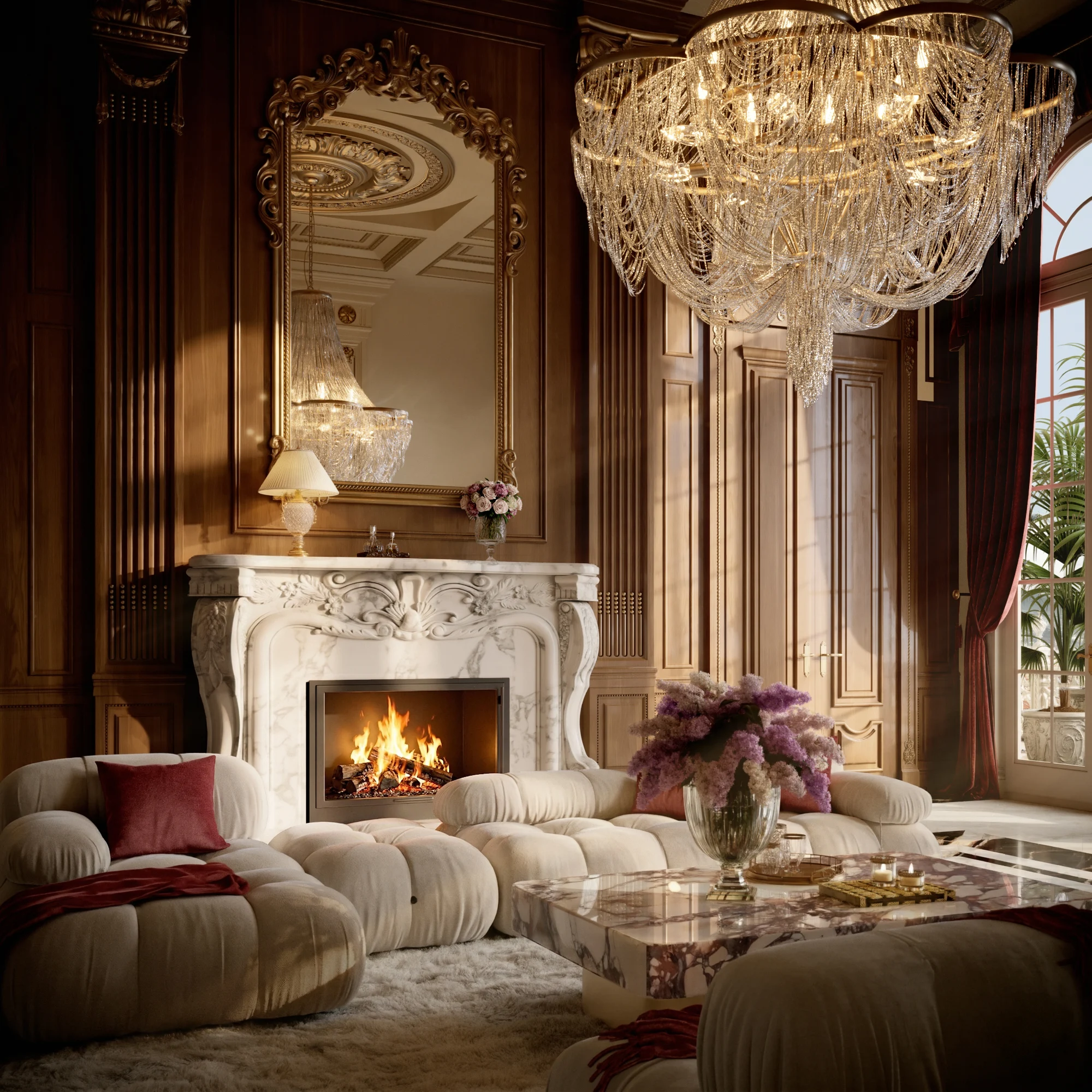
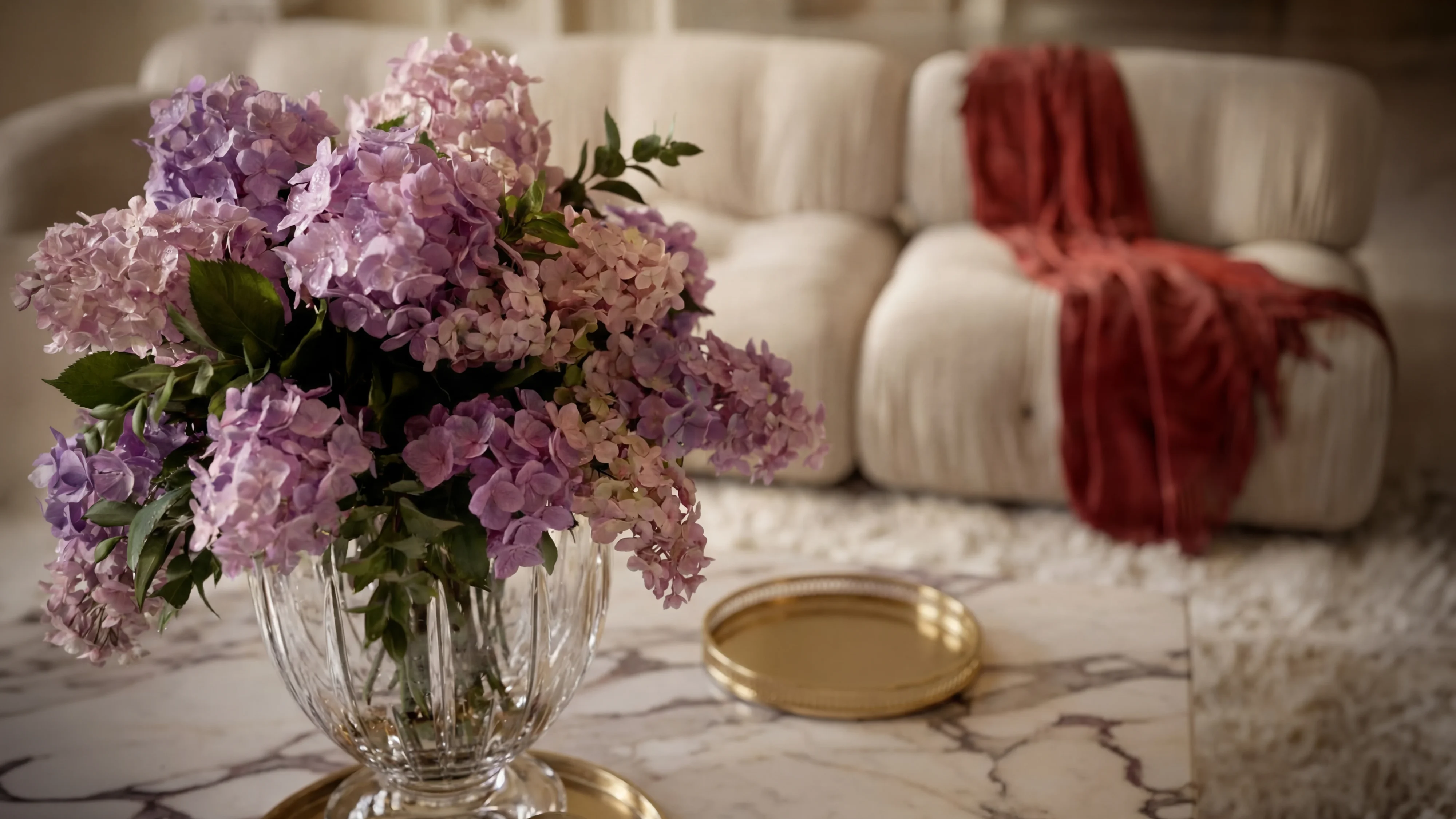
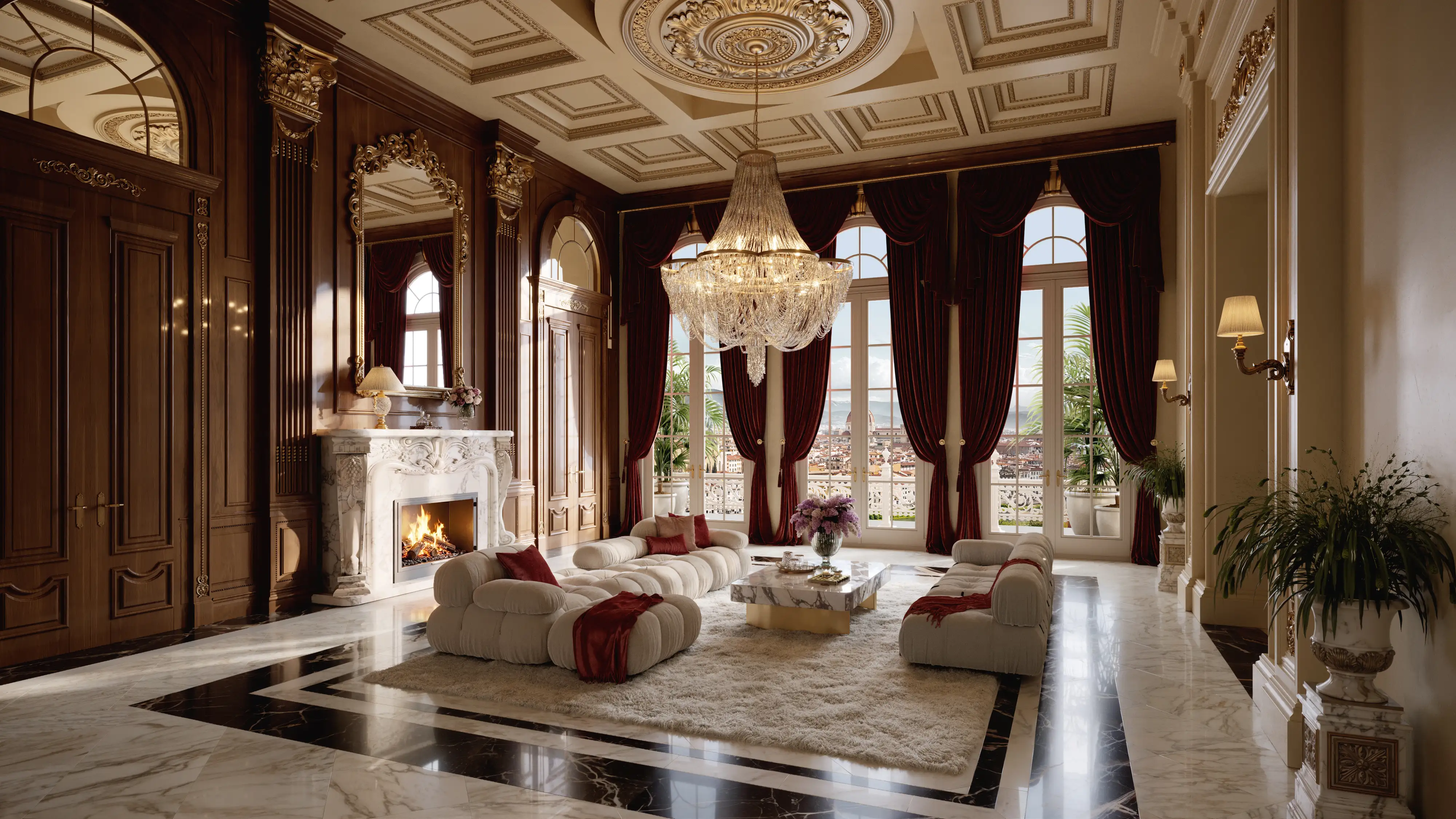
There is a category of architectural visualization commission that sits outside the standard residential and commercial typology — the heritage interior. A room that already exists, or that is being restored to a version of itself that once existed, in which the design language is not contemporary but historical, and in which the brief is not to imagine a new interior but to resurrect, or propose, or bring to visual life a space whose authority comes from another century. Florence Palace presented Render Atelier with exactly this commission: the grand salon of a Florentine palazzo, rendered as a complete interior environment in which every element — the gilded coffered ceiling, the dark walnut panelling with classical arches and carved pilasters, the white Rococo marble fireplace surround, the multi-tiered crystal chandelier, the crimson velvet drapes pooling on the marble floor — carries the visual weight of a design tradition that predates any contemporary reference by three centuries. The brief required Render Atelier to produce a detailed single-room visualization of this grand salon at a level of photographic precision capable of serving a heritage restoration, a luxury hotel conversion, or a private residential commission of equivalent ambition. Six compositions were produced: a wide-angle full-room perspective establishing the complete spatial character of the salon; two close-up compositions — one focused on the fireplace and chandelier relationship, one on the chandelier and window elevation; an aerial downshot through the chandelier looking to the sofa arrangement below; and a still-life close-up of the Carrara marble coffee table, the crystal vase of lavender hydrangeas, and the gilded tray — a detail frame that communicates the quality of finish at the most intimate scale.
The design language of the Florence Palace grand salon is one of deliberate, confident historical register — neoclassical Italian palace architecture at its most assured — interrupted by a single, precisely chosen contemporary element that makes the entire composition work. The room is otherwise historically consistent: a coffered ceiling with gilded moulding rosette at the centre, dark walnut wood panelling with classical arch reveals and fluted pilasters carrying gilt capitols, a marble fireplace in the French Rococo manner with carved acanthus and scrollwork, tall French windows dressed in deep crimson velvet drapes with a view of Florentine terracotta rooflines beyond, and a polished marble floor with a geometric black-and-white inlay border. Against all of this, the furniture: a set of Mario Bellini-inspired tufted modular sofas in cream boucle, their rounded organic profile a deliberate anachronism in this palatial context, dressed with crimson velvet cushions and a cashmere throw in the same deep red. The contrast is the point. The contemporary furniture does not fight the historical room — it activates it. Without it, the room would be a period reconstruction. With it, it becomes a living space: the evidence that someone of refined contemporary taste has chosen this palazzo, these walls, this fireplace, and then chosen to live in it rather than preserve it. Render Atelier’s visualization challenge in this commission was to hold both registers in balance — to render the historical architecture at a standard of precision that confirmed its authority, and to render the contemporary furniture at a standard of material warmth that confirmed its intentionality. The chandelier is the mediating element between the two: its crystal pendants carry both the period reference of the ceiling above and the light-catching quality of the contemporary coffee table’s marble surface below. The fireplace close-up composition concentrates this visual argument in a single tight frame: the carved marble surround on the left, the crystal pendants of the chandelier descending from above, the cream tufted sofa in the foreground, and the fire itself providing the warmth that makes the contrast between historic architecture and modern furniture feel not like a collision but like a choice.
The Florence Palace grand salon represents a specific and growing category of architectural visualization work: the heritage interior brief, in which the studio’s task is not to propose a contemporary design but to realize, at photographic resolution, a room whose design authority comes from a historical tradition. This category of brief is particularly active in Italy, France, and Southern Europe, where the conversion of historic palazzi, villas, and maisons particulières into luxury hotels, private residences, and branded residence developments is generating a significant volume of interior visualization commissions from clients who need imagery that holds the visual standard of the heritage architecture it depicts. Render Atelier’s existing portfolio credential in this space — the Palazzo Portinari Salviati in Florence, rendered for LDC Hotels — combined with the Florence Palace commission, gives the studio a depth of classical Italian interior visualization work that few CGI studios operating in the Gulf and European luxury markets can match. The Florence Palace grand salon is the kind of room that appears in the pages of AD Italia, in the sales brochure of a boutique hotel conversion, and in the portfolio of an interior designer presenting a proposal to a private client who owns, or is considering purchasing, a historic property in Tuscany. The visualization exists to make the room real before it is built — or to make it more real than it already is.
Do you have in hand a project which requires great Interior renderings?
Fill the form below and we will get in touch with you.

We are a Premium Architectural Visualization Studio who can transform your brilliant designs from your imagination into evocative visuals for your clients.
Company
Resources
Chat with us on WhatsApp